Sustainable heating networks: The impact of building-specific load profiles on system design and cost-effectiveness

By wdo, 20 August, 2026

Dr.-Ing. Philip Groesdonk, Managing Director of heatbrAIn GmbH

Many renewable heat sources have a supply profile that fluctuates over time in terms of potential or price. Consequently, load profiles are increasingly being used in planning for heat sinks as well. These profiles have a decisive influence on the sizing, security of supply and economic viability of generators, storage systems and networks. Today, thermal load curves are still frequently modelled using simplified standard load profiles (SLPs). As these profiles originate from the gas supply sector, they fail to adequately capture the interactions between building physics, occupancy patterns and generation systems, which carries the risk of systematic uncertainties or even incorrect sizing.

Individual simulation of building-specific load profiles, on the other hand, can take specific building physics and usage parameters into account. The presentation describes how simulable models of individual buildings can be created using a combination of public geospatial and local energy data, as well as AI support. Using a real-world project area as an example, the presentation demonstrates how load profiles vary due to structural changes in the building stock, the impact of using load profiles as dynamic, adjustable variables rather than static planning parameters on the design of the network and generation infrastructure, and how this, in turn, affects the economic viability of a cold local heating network.

The presentation is based on a paper presented at the 4th North German Heat Research Conference.
Datum
-
Sprecher

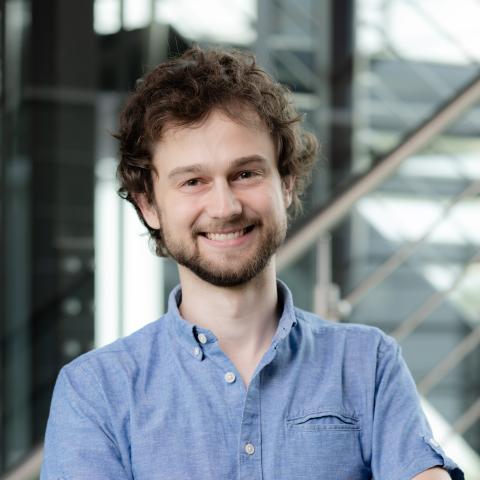
Philip Groesdonk

By wdo, 20 August, 2026

Dr.-Ing. Philip Groesdonk ist Mitgründer und Co-Geschäftsführer von heatbrAIn. Nach seinem Abschluss in Energietechnik (Maschinenbau) mit Fokus auf Erneuerbare Energien an der RWTH Aachen forschte er von 2017 bis 2025 im Rahmen seiner Promotion und in weiteren wissenschaftlichen Arbeiten am Deutschen Zentrum für Luft- und Raumfahrt (DLR) in Jülich. Forschungsthemen waren hier berührungslose und datengetriebene Methoden zur energetischen Charakterisierung und Modellierung von Gebäuden und Quartieren, u. a. die Parametrisierung gebäudescharfer Simulationsmodelle aus KI- und Drohnenbefliegungsdaten. Die am DLR erarbeiteten wissenschaftlichen Erkenntnisse und die dort entstandene Software waren die Grundlage für die Gründung der heatbrAIn GmbH im März 2024. Seitdem hat Philip Groesdonk die Datengrundlage verschiedener Wärmewendeprojekte von Wärmeplanung bis BEW verantwortet.

Philip Groesdonk_heatbrAIn
heatbrAIn
Beschreibung_en

Dr.-Ing. Philip Groesdonk is a co-founder and co-managing director of heatbrAIn. After completing his degree in Energy Engineering (Mechanical Engineering) with a focus on renewable energies at RWTH Aachen University, he carried out research from 2017 to 2025 as part of his PhD and in further academic work at the German Aerospace Centre (DLR) in Jülich. His research focused on non-contact and data-driven methods for the energy characterisation and modelling of buildings and neighbourhoods, including the parameterisation of building-specific simulation models using AI and drone survey data. The scientific findings developed at the DLR and the software created there formed the basis for the founding of heatbrAIn GmbH in March 2024. Since then, Philip Groesdonk has been responsible for the data infrastructure of various heating transition projects, ranging from heating planning to building energy management (BEW).